Blogs
Why Modular Furniture Is the Future of Large Scale Interiors
Why Modular Furniture Is the Future of Large Scale Interiors
Modular furniture is no longer an alternative, it is the backbone of scalable interior development.
Modular furniture has evolved from a convenience driven option into a strategic decision for large scale interior projects. Across offices, hospitals, hotels, and institutions, the demand for speed, consistency, and long term performance has reshaped how furniture is designed and manufactured.
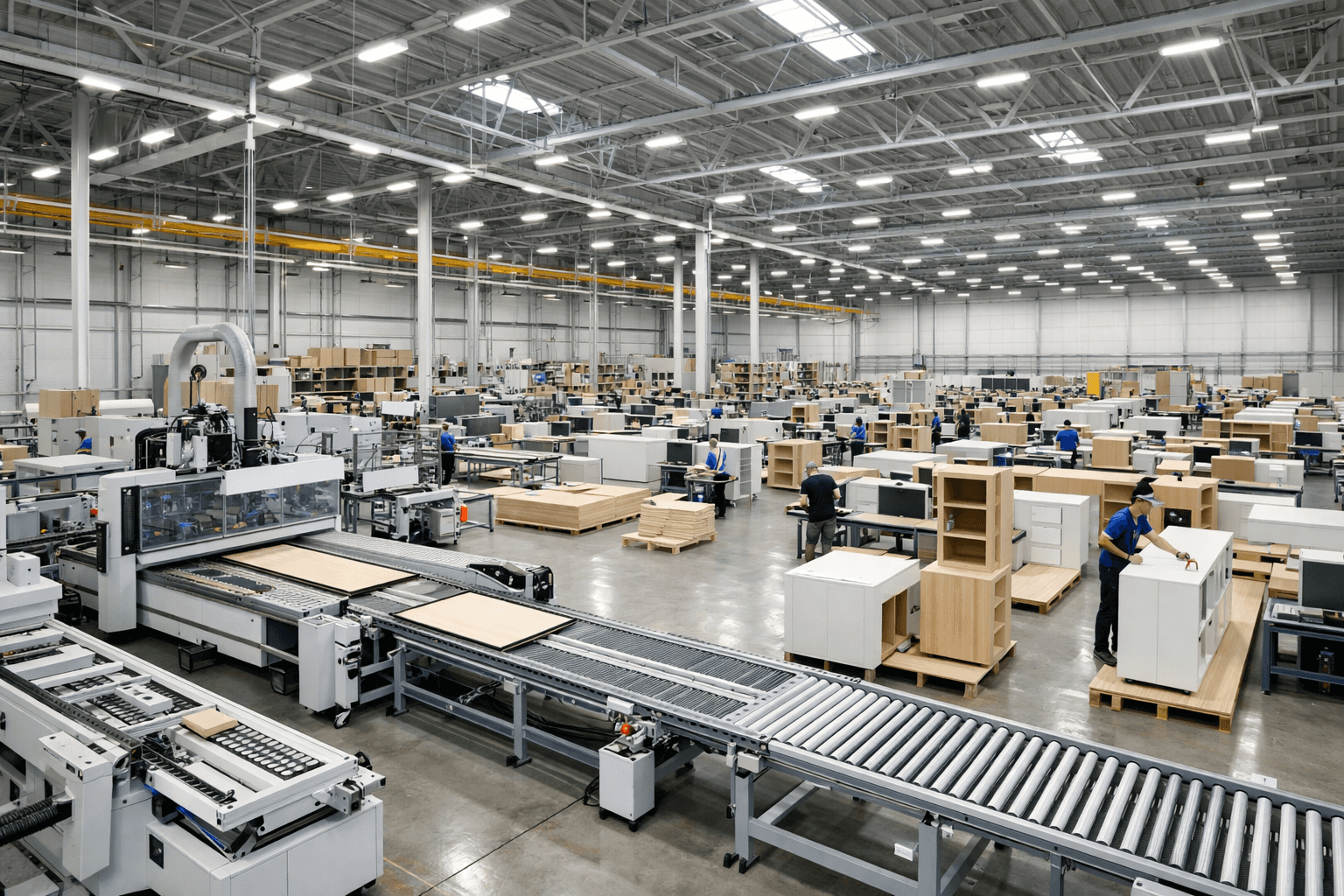
At its core, modular furniture is built around repeatability and precision. Unlike site fabricated furniture, modular systems are produced in controlled factory environments using advanced machinery, standardized processes, and strict quality protocols. This ensures uniform output across hundreds or even thousands of units.
For large organizations, modular furniture delivers three critical advantages.
Predictable Quality
Every module is produced using calibrated machines, CNC routing, and controlled finishing lines. This eliminates inconsistencies that typically arise from on site carpentry and manual fabrication.
Speed of Execution
Factory manufacturing runs parallel to site development. While civil and electrical work progresses on site, furniture production happens simultaneously, reducing overall project timelines significantly.
Scalability and Expansion
Modular systems are designed for future growth. Organizations can expand floors, departments, or facilities while maintaining the same design language and specifications.
Key reasons why decision makers prefer modular furniture include:
• Faster project completion
• Reduced site dependencies
• Better cost control
• Cleaner installation process
• Ease of maintenance and replacement
From a sustainability standpoint, modular furniture also reduces material wastage. Factory optimization allows precise material cutting, reuse of offcuts, and responsible disposal practices. This aligns well with modern ESG goals and green building standards.
In high traffic environments such as corporate offices or healthcare facilities, modular furniture performs better over time. Individual components can be replaced without dismantling entire installations, reducing downtime and lifecycle costs.
As interior projects become larger and more complex, modular furniture offers structure, predictability, and performance. It is no longer a trend but a fundamental shift in how serious projects are executed.
Modular furniture has evolved from a convenience driven option into a strategic decision for large scale interior projects. Across offices, hospitals, hotels, and institutions, the demand for speed, consistency, and long term performance has reshaped how furniture is designed and manufactured.
At its core, modular furniture is built around repeatability and precision. Unlike site fabricated furniture, modular systems are produced in controlled factory environments using advanced machinery, standardized processes, and strict quality protocols. This ensures uniform output across hundreds or even thousands of units.
For large organizations, modular furniture delivers three critical advantages.
Predictable Quality
Every module is produced using calibrated machines, CNC routing, and controlled finishing lines. This eliminates inconsistencies that typically arise from on site carpentry and manual fabrication.
Speed of Execution
Factory manufacturing runs parallel to site development. While civil and electrical work progresses on site, furniture production happens simultaneously, reducing overall project timelines significantly.
Scalability and Expansion
Modular systems are designed for future growth. Organizations can expand floors, departments, or facilities while maintaining the same design language and specifications.
Key reasons why decision makers prefer modular furniture include:
• Faster project completion
• Reduced site dependencies
• Better cost control
• Cleaner installation process
• Ease of maintenance and replacement
From a sustainability standpoint, modular furniture also reduces material wastage. Factory optimization allows precise material cutting, reuse of offcuts, and responsible disposal practices. This aligns well with modern ESG goals and green building standards.
In high traffic environments such as corporate offices or healthcare facilities, modular furniture performs better over time. Individual components can be replaced without dismantling entire installations, reducing downtime and lifecycle costs.
As interior projects become larger and more complex, modular furniture offers structure, predictability, and performance. It is no longer a trend but a fundamental shift in how serious projects are executed.
Modular furniture has evolved from a convenience driven option into a strategic decision for large scale interior projects. Across offices, hospitals, hotels, and institutions, the demand for speed, consistency, and long term performance has reshaped how furniture is designed and manufactured.
At its core, modular furniture is built around repeatability and precision. Unlike site fabricated furniture, modular systems are produced in controlled factory environments using advanced machinery, standardized processes, and strict quality protocols. This ensures uniform output across hundreds or even thousands of units.
For large organizations, modular furniture delivers three critical advantages.
Predictable Quality
Every module is produced using calibrated machines, CNC routing, and controlled finishing lines. This eliminates inconsistencies that typically arise from on site carpentry and manual fabrication.
Speed of Execution
Factory manufacturing runs parallel to site development. While civil and electrical work progresses on site, furniture production happens simultaneously, reducing overall project timelines significantly.
Scalability and Expansion
Modular systems are designed for future growth. Organizations can expand floors, departments, or facilities while maintaining the same design language and specifications.
Key reasons why decision makers prefer modular furniture include:
• Faster project completion
• Reduced site dependencies
• Better cost control
• Cleaner installation process
• Ease of maintenance and replacement
From a sustainability standpoint, modular furniture also reduces material wastage. Factory optimization allows precise material cutting, reuse of offcuts, and responsible disposal practices. This aligns well with modern ESG goals and green building standards.
In high traffic environments such as corporate offices or healthcare facilities, modular furniture performs better over time. Individual components can be replaced without dismantling entire installations, reducing downtime and lifecycle costs.
As interior projects become larger and more complex, modular furniture offers structure, predictability, and performance. It is no longer a trend but a fundamental shift in how serious projects are executed.
Read More
Modular Furniture vs Traditional Furniture: Cost Comparison for Commercial Projects
Jun 11, 2026
Modular Furniture vs Traditional Furniture: Cost Comparison for Commercial Projects
Jun 11, 2026
Lower Delays. Better Quality. Greater Long-Term Value.
Top Benefits of Modular Furniture in Modern Offices
Jun 11, 2026
Top Benefits of Modular Furniture in Modern Offices
Jun 11, 2026
Flexible Workspaces. Better Productivity. Smarter Investment.
What is Modular Furniture? Complete Guide for Offices, Hotels & Commercial Projects
May 5, 2026
What is Modular Furniture? Complete Guide for Offices, Hotels & Commercial Projects
May 5, 2026
Smart. Scalable. Efficient. The Future of Commercial Interiors Starts with Modular Furniture.

Like Our Work?
Let’s Build Together
Like Our Work?
Let’s Build Together